Pumpkin Favor Box SVG: Crafting Success Through Smart Material and Design Choices
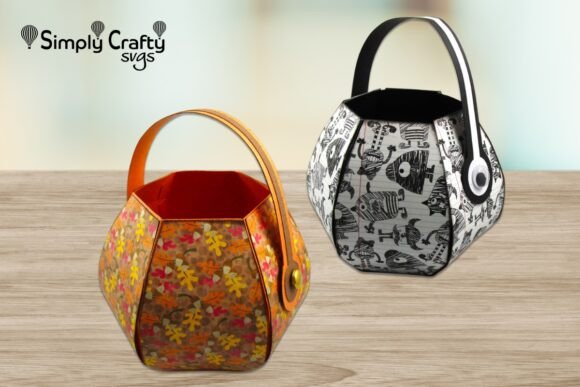
The Pumpkin Favor Box SVG file offers a delightful intersection of seasonal charm and structural engineering for paper crafters. This digital design creates a charming, rounded container that transitions seamlessly between Halloween festivities and Thanksgiving gatherings. However, the success of this project relies less on the cutting machine’s precision and more on your understanding of paper physics and assembly logic. Many crafters download the file expecting an instant result, only to find themselves frustrated by collapsing sides or misaligned panels. Understanding the nuances of this specific 3D structure is essential for creating a favor box that looks professional rather than homemade.
Understanding Structural Integrity Over Aesthetics
A common oversight when working with the Pumpkin Favor Box SVG is prioritizing decorative pattern over structural weight. Because this design features a rounded, bulbous shape with interchangeable panels, it lacks the rigid corners that typically support a box. The structure depends entirely on the tension between the ribs and the side panels. If you select standard 65lb cardstock because it has a beautiful autumn print, the finished box will likely sag under the weight of even light treats.
To avoid this structural failure, you must treat the base material as a chassis. Opt for heavy-weight cardstock, specifically 80lb to 100lb text weight or dedicated textured cardstock like American Crafts AC Textured Cardstock. The texture serves a dual purpose here: it adds visual depth mimicking pumpkin skin while providing the necessary fiber density to hold the curved shape. If you are set on using thinner patterned paper, use it strictly as a decorative layer adhered to a heavier base, or limit its use to the inner lining where it does not bear structural load.
Evaluating Adhesives for Curved Surfaces
Flat boxes forgive weak glue; curved boxes do not. A frequent mistake involves using standard glue sticks or low-tack tape runners on the Pumpkin Favor Box. These adhesives cannot withstand the outward pressure exerted by the curved panels trying to return to their flat state. When the glue fails, the pumpkin loses its roundness and appears misshapen.
For this specific SVG design, liquid craft glue or high-tack double-sided tape is non-negotiable. Liquid glue allows for a brief repositioning window, which is critical when aligning the curved ribs with the side panels. However, it requires patience to dry. If speed is necessary, use a strong, permanent adhesive runner designed for cardmaking. Additionally, consider the role of brads in this assembly. The design often utilizes brads not just as decoration, but as mechanical fasteners at stress points. Skipping the brads to save time removes a key anchor point, making the box significantly less durable for holding candies or tea lights.
Customization Pitfalls and Texture Management
The interchangeable panel system is the standout feature of this Pumpkin Favor Box SVG, yet it is also where many makers encounter alignment issues. The ability to shift the look based on cardstock choice means you can create a "pumpkin-skin" effect through embossing. However, embossing changes the dimensions of the paper. Deep embossing stretches the fibers, potentially making a panel slightly larger than its unembossed counterpart.
If you plan to emboss the panels for texture, do so before final trimming or assembly, and always test fit against the rib structure. A better approach is to use a subtle embossing folder or rely on the natural texture of heavyweight cardstock to maintain dimensional accuracy. Furthermore, when mixing patterns for the ribs and panels, ensure the contrast serves the form. Using busy patterns on both the ribs and the panels can visually flatten the 3D effect. Instead, use solid colors or subtle textures for the ribs to frame the patterned panels, enhancing the rounded silhouette rather than obscuring it.
Handle Functionality vs. Tabletop Decor
The optional handle included in the SVG file presents a decision point that affects usability. While the handle creates a traditional basket aesthetic perfect for trick-or-treating, it introduces a top-heavy element. For tabletop decor or place settings, the handle can make the box unstable or obstructive. Before cutting, determine the primary function of the box.
If the box is intended as stationary decor, omitting the handle results in a cleaner profile and improved stability. The finished dimensions without the handle are a compact 3” x 3.5” x 3”, making it ideal for nesting among other autumn decorations. Conversely, if the handle is required, reinforce the attachment points with extra glue or additional brads. The handle bears the entire weight of the filled box; relying solely on the friction of the slot cuts is rarely sufficient for carrying anything heavier than air.
Sizing Reality Checks and Content Planning
Digital renderings can be deceptive regarding scale. At 3 inches wide and 3.5 inches deep, the Pumpkin Favor Box is deceptively small. A common error is assuming it can hold bulkier items like full-sized candy bars or large gift items. Disappointment arises when the intended contents simply do not fit inside the curved interior.
Always measure your intended fillers against the internal volume, accounting for the curvature that reduces usable space near the edges. This box excels at holding wrapped candies, tea lights, jewelry, or small trinkets. If you need a larger vessel, scale the SVG up proportionally before cutting. However, be aware that scaling up requires exponentially thicker cardstock to maintain rigidity. A 20% increase in size may require a 50% increase in paper weight to prevent the larger curves from buckling.
Leveraging Video Tutorials for Assembly Confidence
Even experienced crafters benefit from visual guidance when constructing complex 3D shapes from 2D files. Relying solely on static diagrams or intuition can lead to reversed panels or incorrect folding sequences that compromise the final shape. The inclusion of a step-by-step video tutorial with this Pumpkin Favor Box SVG is a resource that should not be bypassed.
Watching the assembly process reveals subtle techniques—such as pre-scoring curves or the specific order of gluing—that are difficult to convey in written instructions. Treat the tutorial as part of your preparation phase. Gather your American Crafts cardstock, pattern paper, glue, and brads before pressing play. Following along in real-time prevents the frustration of drying glue or lost momentum. This proactive approach transforms what could be a trial-and-error struggle into a confident, efficient crafting session, ensuring your pumpkin favor boxes are as sturdy as they are beautiful.