Surfer's Paradise Card SVG Design Guide
Elevate your physical and digital portfolio with the Surfer’s Paradise Card SVG, a vibrant dimensional asset that bridges the gap between traditional print design and modern interactive experiences. For graphic designers and creative professionals, this file represents more than just a greeting card template; it is a masterclass in spatial composition, color theory, and user engagement. Whether you are crafting bespoke stationery for a client or seeking unique visual inspiration for a summer-themed branding campaign, understanding the structural nuances of this 3D design can significantly enhance your creative workflow and output quality.
The Intersection of Print Precision and Visual Storytelling
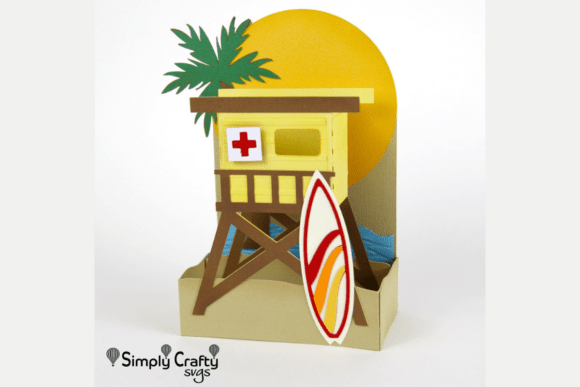
In professional graphic design, the ability to translate two-dimensional vectors into tangible, three-dimensional experiences is a highly valued skill. The Surfer’s Paradise Card SVG excels here by offering a pre-engineered layout that transforms into a 4.2″ x 2.5″ x 6.5″ scene when opened. From a UX perspective, this "mailable design" solves a critical functional problem: creating high-impact dimensionality without sacrificing postal practicality. When flattened to 6.8″ x 6.7″, it maintains standard mailing compatibility, demonstrating how smart engineering supports aesthetic goals.
This balance of form and function is essential for designers working on packaging design or editorial layouts where space is at a premium. The included custom envelope SVG further reinforces the importance of holistic design systems, ensuring that every touchpoint—from the outer packaging to the internal reveal—maintains visual consistency and professional presentation.
Material Selection as a Design Variable
Digital assets only succeed when paired with appropriate physical substrates. The recommended use of American Crafts AC Textured Cardstock highlights a crucial principle in print design: texture influences perception. The specified material weights (12x12 inch for panels and 8.5x11 inch for the lifeguard station) are not arbitrary; they provide the necessary structural integrity for the 3D pop-up mechanism while offering a tactile surface that enhances the coastal color palette. Designers should always consider paper grain, weight, and finish when adapting SVG files, as these variables directly affect the final visual hierarchy and durability of the piece.
Creative Applications Beyond Greeting Cards
While primarily a stationery asset, the Surfer’s Paradise Card SVG offers versatile applications across broader design disciplines. Creative professionals can leverage its elements to strengthen brand identity and marketing communications:
- Social Media Content: Photograph the assembled 3D card to create depth-rich social media graphics that stand out in flat-scrolling feeds, boosting engagement through tactile realism.
- Brand Identity & Merchandise: Adapt the coastal iconography and typography styles for summer promotional campaigns, retail signage, or limited-edition merchandise tags.
- Editorial & Web Inspiration: Use the card’s layering technique as a reference for parallax scrolling effects in web design or layered compositions in digital magazines.
- Packaging Prototyping: Utilize the fold-flat engineering logic to inform sustainable packaging solutions that require compact shipping but dramatic unboxing experiences.
Optimizing Workflow and Assembly
Efficiency is key in professional design environments. This asset streamlines production by providing letter-size compatible files that can be ungrouped for smaller paper formats, reducing waste and optimizing cutter usage. The inclusion of a step-by-step video tutorial addresses the often-overlooked aspect of design handoff, ensuring that clients or production teams can replicate the intended vision accurately. This reduces revision cycles and ensures the final product matches the digital proof, maintaining trust and quality standards.
Ultimately, integrating high-quality assets like the Surfer’s Paradise Card SVG into your resource library does more than facilitate a single project; it refines your approach to dimensional design and visual communication. By studying how typography, color, and structural engineering converge in this file, designers can apply similar principles to create more immersive, memorable, and professionally executed work across both digital and print mediums. Thoughtful selection of such creative assets ensures that every design choice serves both aesthetic beauty and functional clarity.