Turbaned Character: Mastering the Stylized 3D Print
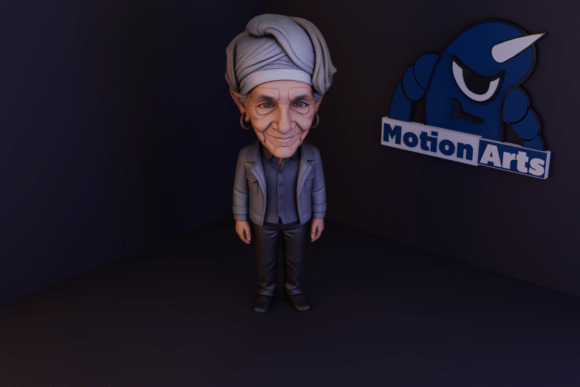
The Turbaned Character represents a fascinating intersection between cultural representation and stylized digital art. For 3D printing enthusiasts, collectors, and creators, this model offers more than just a decorative object; it provides a study in balancing artistic expression with structural engineering. The design features a semi-cartoon aesthetic with a slightly enlarged head and proportionate body, emphasizing facial expressions and personality. However, the appeal of this stylized 3D model often leads makers to underestimate its technical demands. The voluminous turban, intricate earrings, and detailed clothing create a strong visual identity, but they also introduce specific challenges in the printing and post-processing phases that require careful planning.
Many hobbyists and professionals are drawn to this figure for themed decorations or personal collections because of its expressive face and unique silhouette. Yet, the transition from a digital file to a physical sculpture is where satisfaction often hinges on preparation. Understanding the specific geometry of the Turbaned Character helps avoid common pitfalls that result in failed prints, fragile parts, or excessive cleanup time. By approaching this model with an intermediate mindset, you can preserve the artist’s intent while ensuring the final piece is durable and visually striking.
Evaluating Structural Integrity Before Slicing
A frequent oversight when downloading or purchasing stylized character models is assuming that digital aesthetics automatically translate to physical stability. The Turbaned Character is designed with sturdier limbs and balanced volumes specifically to aid printability, but this does not make it immune to physics. One of the most common mistakes is ignoring the center of gravity during orientation. Because the head is slightly enlarged and topped with a voluminous turban, the model is top-heavy. Printing this figure in a standard upright position without adequate base adhesion or brim support often leads to warping or detachment mid-print.
Rather than relying solely on default slicer settings, evaluate the weight distribution manually. Consider using a raft or a wide brim to anchor the lower body securely. Some experienced makers even opt to print the head and turban assembly separately from the body if the overhangs are too severe, assembling them later with epoxy. This decision should be made before the first layer is laid down. Ignoring this balance check doesn't just waste filament; it compromises the dimensional accuracy of the clothing folds and facial features, turning a high-detail sculpture into a warped disappointment.
Navigating Support Structures for Complex Geometry
The product description explicitly states that supports are required, yet many users still attempt to print the Turbaned Character without them to save material or reduce scarring. This is perhaps the most critical error to avoid. The earring details, the underside of the turban folds, and the chin area all possess angles that exceed safe overhang limits for FDM printing. Attempting to bridge these gaps without support results in sagging layers that obscure the very expressions and details that make the model desirable.
Instead of avoiding supports, focus on optimizing them. Use tree supports or organic supports to minimize contact points on the expressive face and clothing textures. These support types are easier to remove and leave less surface damage on stylized models compared to traditional linear supports. Pay special attention to the turban’s volume; internal supports may be necessary if the geometry creates hollow cavities with steep ceilings. Failing to properly support these areas forces aggressive post-processing, which risks sanding away the subtle semi-cartoon nuances that define the character's personality. A well-supported print preserves the crispness of the earrings and fabric folds, reducing finishing time significantly.
Material Selection and Detail Preservation
Choosing the wrong filament can negate the benefits of a high-quality sculpt. While PLA is the standard for most stylized figures, the Turbaned Character’s combination of fine facial features and bulky clothing requires thoughtful material consideration. A common misunderstanding is that any standard PLA will suffice. However, matte PLA or PLA+ often yields better results for this specific type of model. Glossy filaments tend to highlight layer lines on the smooth surfaces of the face and turban, distracting from the sculpted expressions. Matte finishes diffuse light, making the semi-cartoon style appear more cohesive and professional.
Furthermore, consider the nozzle size relative to the detail level. Pushing a 0.6mm nozzle through a model with delicate earring details and facial micro-expressions will result in a loss of fidelity. Conversely, using a 0.2mm nozzle for the entire print might be unnecessarily slow given the sturdy limb construction. A practical approach is to use variable layer heights or adaptive layers in your slicer. This allows for finer resolution on the head and accessories while maintaining faster, stronger layers for the body and base. Neglecting this optimization leads to either a loss of character definition or inefficient print times, both of which affect the overall value of the project.
Post-Processing and Finishing Considerations
The semi-cartoon style of the Turbaned Character relies heavily on clean lines and smooth transitions. Beginners often treat this model like a generic miniature, applying heavy primer coats that fill in the carefully modeled eyelids, lip curves, and turban textures. This aggressive priming effectively erases the artist's work. Before applying any filler or primer, inspect the raw print under good lighting. Identify only the actual layer lines or support marks that need correction.
Use spot-filling techniques rather than blanket coating. Apply putty or UV resin only to seams and imperfections, preserving the original sculpted texture elsewhere. When painting, remember that the enlarged head serves as the focal point. Dry brushing or washing should be applied lightly to maintain the soft, stylized look rather than creating harsh realism that clashes with the semi-cartoon proportions. Rushing the finishing process is where many promising prints fail to achieve their decorative potential. Patience in post-processing ensures the strong visual identity of the Turbaned Character remains intact.
Verifying File Quality and Licensing
Before committing hours to printing, verify the source and integrity of the 3D file. Not all versions of stylized characters are created equal. Some free or low-cost variants may have non-manifold geometry, holes in the mesh, or insufficient wall thickness in the turban or earrings. These defects are often invisible in thumbnail images but catastrophic during printing. Always run a mesh repair check in your slicer or dedicated software before starting.
Additionally, understand the licensing terms if you intend to use the Turbaned Character for commercial purposes, such as selling painted replicas or using it in marketing materials. Many stylized models are licensed for personal use only. Overlooking this detail can lead to legal issues or platform takedowns for entrepreneurs and small business owners. Confirming the file’s technical health and legal usage rights upfront prevents wasted resources and protects your creative or commercial investment. Taking these preparatory steps ensures that your experience with this expressive, personality-filled model is as rewarding as the final sculpture itself.