Carry Handle Retail Gift Bag Box: A Practical Guide to Structural Integrity and File Selection
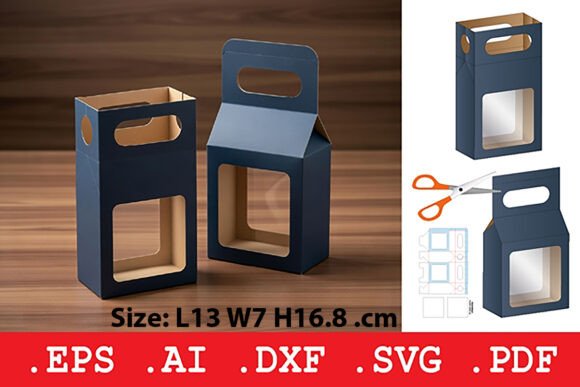
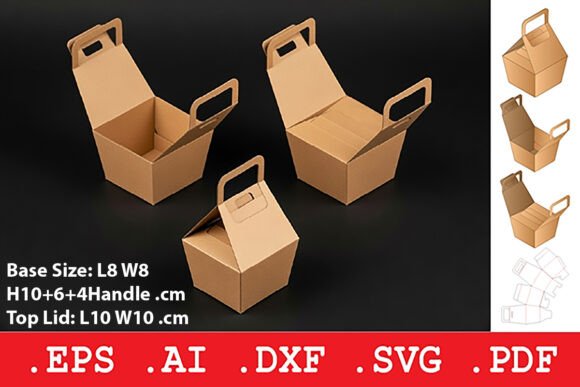
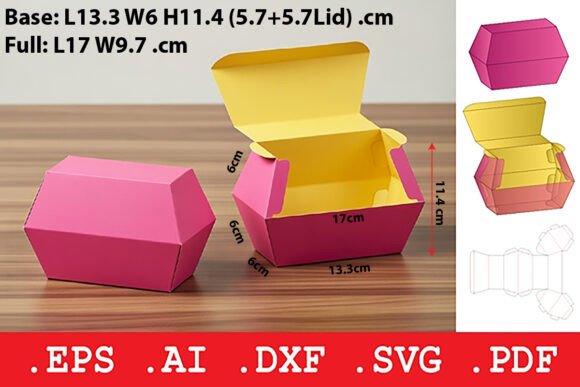
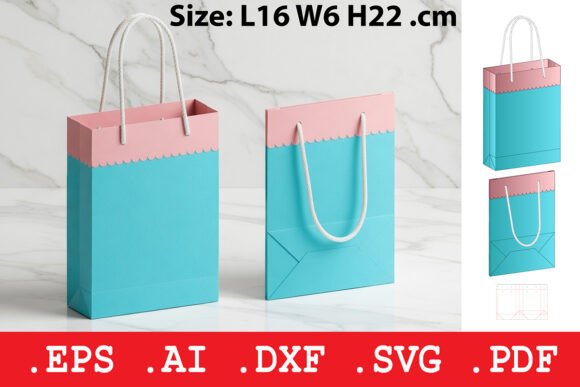
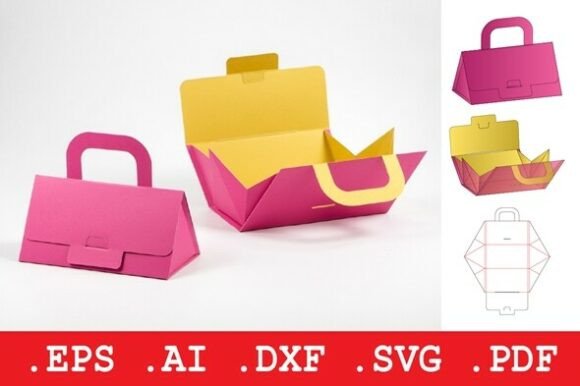
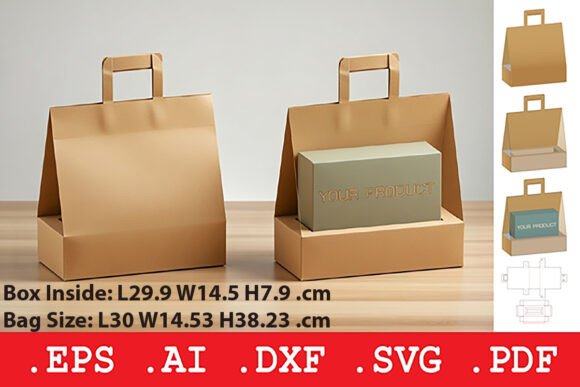
The Carry Handle Retail Gift Bag Box represents a significant shift in sustainable packaging design, moving away from adhesive-heavy assembly toward intelligent structural engineering. This packaging template combines a sturdy carry handle with an integrated base tray, creating a secure vessel for product presentation without relying on glue or tape. For small business owners, makers, and retail professionals, this design offers a clean, modern aesthetic that enhances product display while simplifying the fulfillment process. However, the transition from digital file to physical object is where many projects fail. Understanding the mechanical nuances of this foldable structure is essential to avoid wasted materials and disappointing results.
Understanding the Integrated Base Tray Mechanism
A common misunderstanding when evaluating this packaging style is assuming it functions like a standard paper bag. It does not. The Carry Handle Retail Gift Bag Box relies entirely on geometric tension and interlocking tabs to maintain its shape. The integrated base tray is the critical component here; it must support the weight of the contents while resisting the outward pressure exerted by the side panels. When users treat this as a simple folding exercise rather than a structural assembly, the box often sags or collapses under minimal weight.
To ensure stability, you must verify the lock-tab depth relative to your chosen material thickness. A frequent error occurs when designers use a template optimized for 300gsm cardstock but attempt to cut it from 180gsm paper or heavy corrugated board. If the material is too thin, the friction fit fails, and the base will not stay locked. Conversely, if the material is too thick, the tabs cannot fully seat into their slots, leaving the structure unstable. Always perform a test cut with your specific substrate before committing to a full production run. The goal is a snug fit that requires deliberate pressure to assemble, ensuring the box remains rigid during transport and handling.
Selecting the Correct Vector Format for Your Hardware
The included files—.DXF, .SVG, .EPS, .PDF, and .AI—are not interchangeable alternatives; they serve distinct technical purposes. Choosing the wrong format is a primary cause of production inefficiency and quality issues. Many beginners default to .SVG because it is widely recognized by hobbyist software, but this can be problematic for industrial applications.
- .DXF (Drawing Exchange Format): This is the industry standard for CNC routers and laser cutting hardware. It preserves precise geometry and layer information necessary for separating cut lines from score lines. Using .SVG on a laser cutter can sometimes result in double-cut lines or ignored scoring paths, leading to charred edges or failed folds.
- .SVG (Scalable Vector Graphics): Ideal for digital design integration and craft cutters like Cricut or Silhouette. However, SVGs can sometimes distort complex curves when scaled significantly. Use this format primarily for prototyping or light-duty crafting, not for precision manufacturing.
- .AI (Adobe Illustrator Source): This is your master file for customization. If you need to adjust tab lengths for different material calipers or add branding elements, always work within the .AI file. Editing a flattened .PDF or .EPS can destroy the parametric relationships between cut and fold lines.
- .EPS and .PDF: Reserve these for professional printing services or manual cutting templates. They are excellent for visual proofing but lack the editable vector nodes required for modifying the structural design.
Mismatching the file type to your equipment leads to hours of troubleshooting. For example, importing a print-ready PDF into a laser cutter often results in rasterized images instead of vector paths, forcing the machine to engrave rather than cut. Always match the file extension to your hardware’s native preference to maintain dimensional accuracy.
Material Grain Direction and Structural Performance
Even with the correct file and material thickness, ignoring paper grain direction can compromise the Carry Handle Retail Gift Bag Box. Paper and cardstock have a grain caused by the alignment of fibers during manufacturing. Folding against the grain causes cracking and weakens the structural integrity of the handle and base locks. Folding with the grain produces crisp, strong creases that reinforce the box’s geometry.
Before cutting, identify the grain direction by gently bending the sheet both ways; the direction that offers less resistance and creates a smoother curve is the grain. Orient your nesting layout so that the primary vertical folds and handle stress points align with this direction. Neglecting this step is particularly costly when using premium textured stocks or recycled materials, which are more prone to fiber tearing. A structurally sound box made from mid-weight cardstock with correct grain orientation will outperform a heavy-stock box assembled against the grain every time.
Avoiding Design Customization Pitfalls
While the .AI source file allows for full customization, altering the structural geometry requires caution. A frequent mistake is resizing the box by stretching the entire artboard. This distorts the ratio between slot widths and tab lengths, rendering the glue-free assembly mechanism useless. Slots that become too wide will not grip, while slots that shrink will tear during assembly.
If you need to resize the Carry Handle Retail Gift Bag Box, adjust the panel dimensions individually while keeping the connection points constant. Alternatively, use the scale tool only if you are also proportionally adjusting the tolerance settings for your specific material. Additionally, be mindful of bleed areas when adding graphics. Because this box folds into a three-dimensional form, artwork placed too close to crease lines may end up hidden inside the structure or distorted across a fold. Maintain a safe margin of at least 3-5mm from all score lines to ensure your branding remains visible and professional.
Evaluating Suitability for Retail and Takeaway Use
This packaging template excels in retail gifting and shopping scenarios, but it has limitations that must be acknowledged. The open-top design and ventilated structure make it unsuitable for liquids, loose granular items, or products requiring airtight sealing. Attempting to force this format to carry incompatible products leads to spillage and customer dissatisfaction.
For takeaway use, ensure the handle width is sufficient for comfortable gripping, especially if the contents are dense. Test the loaded box with a dynamic lift simulation—swing it gently and set it down repeatedly—to verify that the base tray does not disengage under momentum. If your product is heavy, consider reinforcing the handle area with a secondary layer or selecting a denser board grade rather than simply enlarging the box size. Practical testing prevents the embarrassment of structural failure at the point of sale.
Ultimately, the success of the Carry Handle Retail Gift Bag Box depends on respecting its engineering constraints. By selecting the appropriate vector format, matching material thickness to tab tolerances, honoring grain direction, and validating structural limits through prototyping, you transform a simple digital template into a reliable, high-value packaging asset. This thoughtful approach not only reduces waste and cost but also communicates a commitment to quality that resonates with modern consumers.