Elevating Packaging Design: A Comprehensive Guide to the Scallop Edge Gift Bag Template
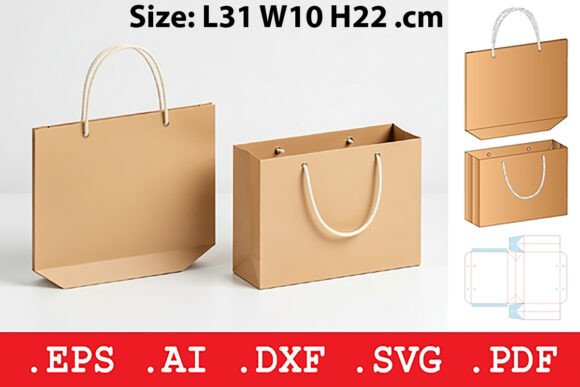
In the world of retail, events, and personal gifting, the presentation is often just as important as the item inside. While standard rectangular gift bags serve a functional purpose, they rarely evoke a sense of luxury or bespoke craftsmanship. This is where specialized packaging design templates, such as the Scallop Edge Gift Bag with Rope Handles, bridge the gap between utility and artistry. For designers, boutique owners, and crafting enthusiasts, understanding the anatomy and application of this specific template is essential for creating packaging that feels premium, structural, and intentional.
This guide explores the significance of scallop edge designs, the technical considerations of paper weight and assembly, and how digital file formats empower modern creators to produce professional-grade packaging in-house or at scale.
The Anatomy of Elegant Packaging
To truly appreciate why this template stands out, one must understand its structural components. Unlike generic die-cut patterns, the Scallop Edge Gift Bag is engineered with three distinct features that dictate both its aesthetic appeal and physical durability.
The Decorative Scallop Top Edge
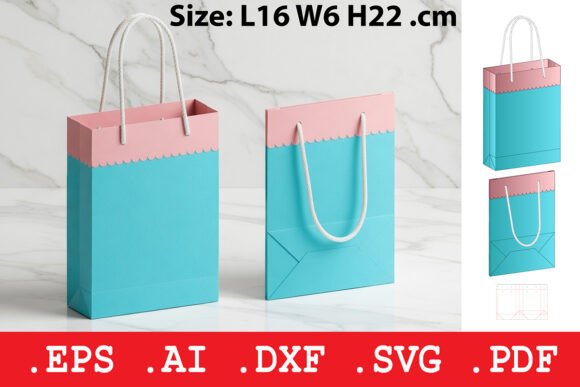
The defining feature of this bag is the undulating, wave-like cut along the top rim. In design psychology, curved lines are associated with softness, elegance, and organic beauty, contrasting sharply with the rigid, industrial feel of straight-edged packaging. The scallop edge serves a dual purpose: it acts as an immediate visual cue of high value and provides a natural framing device for the contents when the bag is open. However, this decorative element requires precision; a poorly executed scallop can look jagged or amateurish, which is why vector-based templates are superior to freehand cutting.
Reinforced Top Fold for Handle Attachment
A common failure point in DIY or low-quality gift bags is the handle tearing through the paper. This template addresses that vulnerability through a reinforced top fold. By designing the template with an extended upper section that folds inward, the area surrounding the rope handle cutouts becomes double-thick. This structural redundancy distributes the weight of the bag’s contents across a broader surface area rather than concentrating stress on a single layer of paper. For retailers carrying heavier items like candles, books, or ceramics, this reinforcement is not merely a design choice—it is a necessity for functionality.
Envelope-Style Bottom Gusset
Capacity and storage are practical concerns that often clash with delicate aesthetics. The classic envelope-style bottom gusset solves this by allowing the bag to expand outward when filled while maintaining a slim profile when empty. This folding mechanism creates a flat base that allows the bag to stand upright on a shelf or table—a crucial feature for retail displays. Furthermore, because the gusset folds flat, these bags can be stored efficiently in bulk without taking up excessive space, making them ideal for businesses managing inventory or event planners preparing for large gatherings.
Material Science: Selecting the Right Paper Weight
Even the most perfectly designed template will fail if constructed from inappropriate materials. The specifications for this Scallop Edge Gift Bag explicitly recommend 200–350 gsm (grams per square meter) paper. Understanding why this range exists helps prevent wasted materials and structural failures.
- Below 200 gsm: Paper in this range, such as standard text weight or light cardstock, lacks the rigidity required for the reinforced fold and gusset. The scallop edges may curl or droop over time, and the rope handles are likely to tear under minimal weight.
- 200–250 gsm: This is the sweet spot for lightweight retail packaging and favor bags. It offers enough stiffness for crisp folds and clean glue tab adhesion while remaining easy to manipulate by hand during assembly.
- 300–350 gsm: Heavyweight cardstock in this range produces a truly premium, box-like feel. It is optimal for luxury boutiques and high-end events. However, users should note that thicker stocks require deeper scoring to prevent cracking along fold lines and may demand stronger adhesives for the glue tabs.
Selecting a paper with a smooth finish is also advisable for this specific template. Textured papers can sometimes interfere with the precise alignment of glue tabs or result in uneven adhesive bonding, compromising the bag's integrity.
Digital Versatility: Understanding File Formats
Modern packaging design relies heavily on digital fabrication. Whether you are using a home craft cutter, a professional laser engraver, or sending files to an industrial print shop, having access to the correct file format is critical. This template includes five distinct formats, each serving a unique role in the production workflow.
Vector Formats (.SVG, .EPS, .AI)
Scalable Vector Graphics (.SVG) are the industry standard for digital craft cutters like Cricut and Silhouette. Because vectors use mathematical paths rather than pixels, they can be resized infinitely without losing quality. This allows a creator to scale the bag from a miniature jewelry pouch to a large tote without any loss of line crispness. .EPS and .AI (Adobe Illustrator) files serve similar purposes but are geared toward professional printing and industrial manufacturing. These formats preserve layers, spot colors, and cut lines, enabling print shops to separate the printing process from the die-cutting process seamlessly.
CNC Compatibility (.DXF)
The .DXF (Drawing Exchange Format) file is specifically optimized for CNC routers and laser cutting hardware. Unlike standard vectors, DXF files often contain simplified geometry that machines can interpret more efficiently, reducing processing errors during automated cutting. For small businesses producing packaging in batches, this compatibility streamlines the transition from digital design to physical product.
Manual Reference (.PDF)
Not every project requires digital fabrication. The included PDF serves as a print-ready document for those who prefer traditional methods. It functions as a reliable reference for manual cutting and scoring, ensuring that even without a machine, the proportions and glue tab placements remain accurate. This inclusivity makes the template accessible to beginners learning the fundamentals of package construction.
Practical Applications in Business and Creativity
The versatility of the Scallop Edge Gift Bag extends far beyond simple gift wrapping. Its refined appearance makes it a strategic asset in various professional and creative contexts.
Boutique Retail Branding: In a saturated market, unboxing experiences drive customer loyalty. A custom-colored scallop bag stamped with a logo creates a tactile brand touchpoint that plastic or generic paper bags cannot replicate. The reinforced handles signal to customers that the business cares about quality details.
Event Favors and Weddings: For weddings, corporate galas, or baby showers, uniformity and elegance are paramount. The ability to batch-produce identical bags using CNC or laser cutting ensures that every guest receives a flawless favor container. The envelope gusset accommodates varying favor sizes, from small trinkets to larger edible treats.
Educational and Prototyping Use: Design students and packaging professionals use templates like this to study structural engineering. Assembling the bag teaches valuable lessons about grain direction, adhesive selection, and the relationship between 2D patterns and 3D forms. It serves as an excellent foundational exercise before moving on to complex custom packaging designs.
Common Misconceptions About DIY Packaging
Despite the accessibility of digital templates, several misconceptions persist regarding DIY packaging production. Addressing these helps set realistic expectations and improve outcomes.
One common assumption is that any paper will work if the design is good. As discussed, material selection is inseparable from structural design. Another misconception is that digital cutting eliminates the need for finishing skills. While machines handle the cutting, assembly still requires human precision. Glue tabs must be aligned correctly, and folds must be scored sharply to achieve the "retail-ready" appearance promised by the template. Finally, some believe that vector files are universally interchangeable. While conversion is possible, using the native format intended for your specific hardware (e.g., DXF for lasers, SVG for plotters) prevents subtle scaling or node issues that can ruin a production run.
Conclusion
The Scallop Edge Gift Bag with Rope Handles represents more than just a container; it is a synthesis of aesthetic tradition and modern manufacturing technology. By combining a decorative silhouette with engineered reinforcements and versatile file compatibility, it empowers creators to produce packaging that rivals commercial standards. Whether you are a boutique owner seeking to elevate your brand, an event planner coordinating a seamless experience, or a maker exploring the intersection of design and structure, mastering this template provides a foundation for excellence in paper packaging. Understanding the interplay of design, material, and technology transforms a simple sheet of paper into a lasting impression.