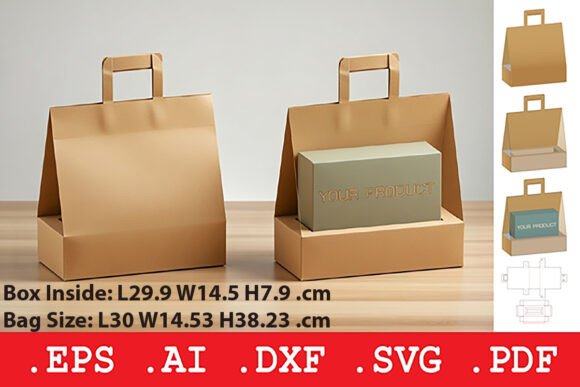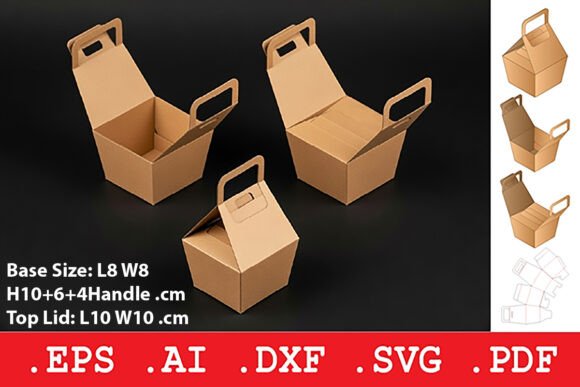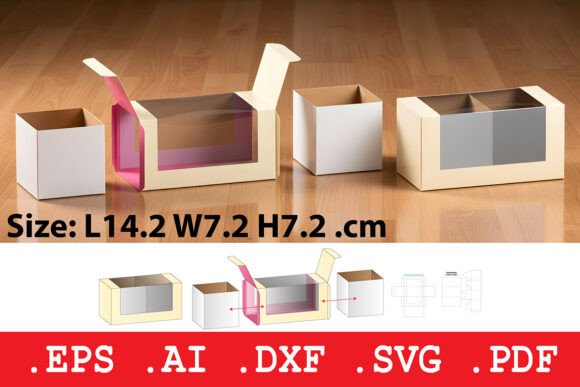
Carry Handle Window Retail Box: A Versatile Packaging Guide
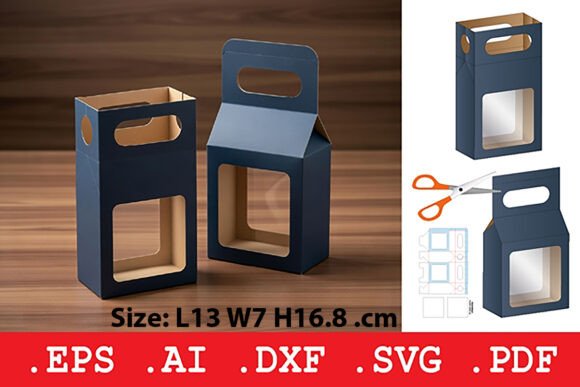
Packaging serves as the first physical interaction between a product and its recipient, and the Carry Handle Window Retail Box is designed to make that moment functional and visually engaging. This specific template combines utility with presentation, featuring an integrated handle for easy transport and a prominent front window that allows the contents to be seen without opening the package. Engineered for 200–350 gsm paper stock, it strikes a balance between lightweight portability and structural integrity. The design relies on precise die-cutting and tab-locking mechanisms rather than adhesive, making assembly clean, reversible, and accessible for users across various skill levels and industries.
Why Visibility and Portability Matter in Modern Packaging
The decision to use a box with a window and handle is rarely just about aesthetics; it solves specific logistical and marketing challenges. For retail environments, the window acts as a silent salesperson. Customers can verify color, texture, and quality instantly, which reduces hesitation and return rates. The carry handle transforms a static shelf item into a mobile experience, encouraging impulse purchases by removing the friction of carrying a bulky item. Whether you are selling artisanal baked goods, handmade soaps, or boutique electronics, this format signals that the product inside is ready for immediate use or gifting.
Beyond consumer psychology, the glue-free construction offers practical advantages. Adhesives can fail over time, leave residue, or complicate recycling processes. A tab-closure system ensures the box remains secure during transit while allowing for flat storage when not in use. This efficiency appeals to anyone managing inventory space or shipping logistics, from home-based sellers to established brick-and-mortar stores.
Evaluating Priorities: From Hobbyists to Commercial Printers
Different users approach the Carry Handle Window Retail Box with distinct goals. Understanding these varying priorities helps determine if this template aligns with your current project needs.
For Beginners and Hobbyists: Accessibility is often the primary concern. If you are new to packaging design or crafting, the glue-free assembly is a significant benefit. It allows for trial and error without wasting materials on permanent mistakes. The included PDF file serves as an excellent reference for manual cutting and folding, helping novices understand how 2D patterns translate into 3D structures. For this group, the value lies in the learning curve and the ability to create professional-looking results with basic tools like craft knives and bone folders.
For Small Business Owners and Entrepreneurs: Cost-efficiency and brand perception drive decisions. You likely need packaging that looks premium but does not require expensive custom tooling or minimum order quantities. This template supports standard paper weights (200–350 gsm), meaning you can source materials locally or print short runs digitally. The ability to customize the AI or EPS files means you can add logos, instructions, or seasonal branding without hiring a designer from scratch. Here, the box is evaluated on its return on investment and its ability to scale alongside business growth.
For Professional Designers and Marketers: Flexibility and technical compatibility are paramount. You need assets that integrate seamlessly into existing workflows. The provision of .AI and .EPS files ensures that vector lines remain crisp at any scale and that color profiles can be managed accurately for industrial printing. The .DXF file is particularly valuable for those utilizing CNC routers or laser cutters for prototyping or mass production. Professionals evaluate this template based on layer organization, line accuracy, and the ease of modifying dimensions to fit unique product specifications.
For Educators and Workshop Leaders: Reliability and clarity are key. When teaching packaging design, STEM concepts, or art classes, you need a template that consistently works. The precise die-cut design ensures clean folds, reducing frustration for students. The variety of file formats allows educators to adapt the lesson to available technology, whether that involves digital fabrication labs or traditional hand-building techniques. The educational value here extends beyond the box itself, serving as a tangible example of structural engineering and spatial reasoning.
Technical Specifications and Material Considerations
Success with the Carry Handle Window Retail Box depends heavily on selecting the appropriate material. The recommended range of 200–350 gsm covers most retail applications, but understanding the nuances within this range is essential.
- 200–250 gsm: Ideal for lighter items such as jewelry, cosmetics, or confectionery. This weight folds easily by hand and produces sharp creases, making it perfect for intricate details and manual assembly.
- 300–350 gsm: Better suited for heavier products like ceramics, glassware, or dense food items. This thickness provides greater rigidity and load-bearing capacity for the handle. Note that thicker stocks may require scoring before folding to prevent fiber cracking along crease lines.
The die-cut design is optimized for these weights, ensuring that tab slots are neither too loose nor too tight. When using digital fabrication methods like laser cutting, always perform test cuts on your specific material batch, as density and coating can vary even within the same gsm rating. For manual cutting, the PDF template includes clear trim and fold lines to guide precision.
Choosing the Right File Format for Your Workflow
The versatility of this template is amplified by the comprehensive file package included. Selecting the correct format streamlines production and prevents technical headaches.
- .DXF (Drawing Exchange Format): The industry standard for CNC machines, plotters, and many laser cutters. Use this when automated cutting is required. It contains pure geometric data without styling, ensuring machines interpret cut and score lines correctly.
- .SVG (Scalable Vector Graphics): Best for craft cutters (Cricut, Silhouette) and web-based design tools. This format is lightweight and editable in free software like Inkscape, making it accessible for hobbyists and small-scale creators.
- .EPS (Encapsulated PostScript): The preferred choice for commercial offset and digital printing. It preserves vector quality and color information, ensuring that professional print shops can reproduce your design exactly as intended.
- .PDF (Portable Document Format): Essential for viewing, proofing, and manual cutting. While not typically used for machine cutting, it serves as the universal reference document for checking dimensions and assembly instructions.
- .AI (Adobe Illustrator): The master source file. Use this for deep customization, such as resizing the window, adjusting handle length, or adding complex artwork. It retains all editable paths and layers for maximum creative control.
Practical Applications Across Different Sectors
The adaptability of the Carry Handle Window Retail Box makes it relevant far beyond generic retail. Consider how different sectors leverage this specific form factor.
In the food and beverage industry, hygiene and freshness are critical. The window allows customers to inspect baked goods or produce, while the sturdy handle facilitates safe transport from market to home. Bakers often use 300 gsm uncoated stock to convey a natural, organic feel, pairing the structural reliability of the box with sustainable messaging.
For corporate gifting and events, presentation is everything. Marketing teams use this box to distribute branded merchandise, sample kits, or welcome packages. The ability to print full-color graphics on the exterior while showcasing the gift inside creates a cohesive brand experience. The handle adds a tactile element of convenience that recipients appreciate during conferences or trade shows.
Educational institutions and museums utilize similar packaging for activity kits or souvenir sets. The durability of the tab-lock construction ensures contents remain secure during handling by children or tourists. Educators appreciate that the box can be flattened and stored efficiently between semesters or exhibitions, maximizing limited storage space.
Making the Final Decision
Determining whether the Carry Handle Window Retail Box is right for you involves assessing your specific constraints and objectives. If your priority is rapid prototyping with minimal waste, the glue-free design and SVG/PDF options offer a low-risk entry point. If you require high-volume commercial packaging, the DXF and EPS files provide the technical foundation needed for industrial manufacturing.
Consider your product’s weight and fragility. While 350 gsm offers substantial support, extremely heavy or delicate items may require additional internal inserts or reinforcement beyond what this single-piece template provides. Conversely, if your product is very light, opting for the lower end of the paper weight spectrum can reduce shipping costs and material expenses.
Ultimately, this template represents a convergence of form and function. It removes barriers to entry for beginners while providing the technical depth professionals demand. By aligning the file format, material choice, and assembly method with your specific audience and goals, you transform a simple packaging template into a strategic asset for presentation, protection, and user experience.