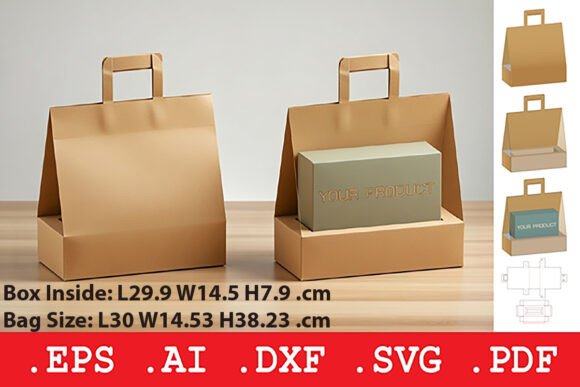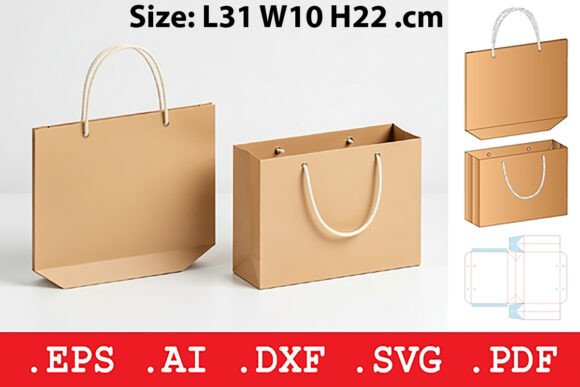
Paper Shopping Bag Template: Design & Assembly Guide
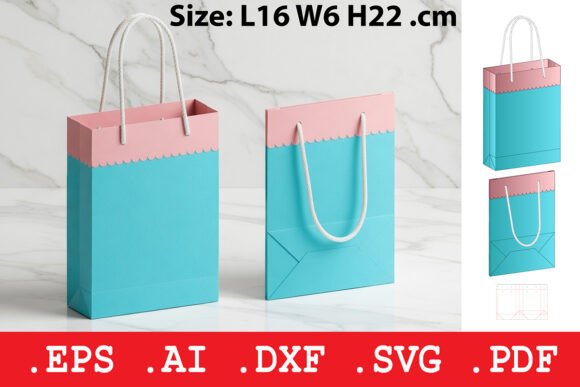
Creating professional packaging in-house starts with a reliable foundation. A high-quality paper shopping bag template provides the precise structural blueprint needed to produce consistent, durable carriers without relying on expensive pre-made stock. This specific classic design eliminates guesswork by offering exact fold lines, glue tabs, and cut paths that result in a premium finished product. Whether you are prototyping a new retail concept or producing small batches of custom gift packaging, having an accurate digital file ensures every bag stands upright and holds its shape.
The value of this template lies in its engineered balance of form and function. It features reinforced top edges to prevent tearing under weight and integrated handle holes positioned perfectly for rope or twisted paper handles. Unlike generic patterns found online, this layout includes gusseted sides that expand to accommodate bulky items while allowing the bag to fold completely flat for efficient storage. The flat square bottom is designed for stable standing, making it ideal for boutique displays or takeout counters where presentation matters as much as utility.
Key Structural Features for Durability
Understanding the anatomy of this paper shopping bag template helps users maximize its potential. The reinforced top edge is perhaps the most critical component for longevity. When customers lift a loaded bag, stress concentrates at the handle attachment points. This template accounts for that stress distribution, ensuring the material does not fail during transport. For makers using lighter cardstock or heavy text-weight paper, this reinforcement zone guides where to apply additional adhesive or backing strips during assembly.
The gusset design serves a dual purpose. Functionally, it creates the necessary volume for irregularly shaped products like apparel boxes, bakery items, or gift sets. Logistically, it allows the finished bags to nest compactly. Small business owners often struggle with limited back-of-house storage; being able to stack hundreds of assembled bags in a shallow bin solves a common operational headache. The integrated handle holes are pre-measured to fit standard industry hardware, saving time on manual marking and reducing waste from misaligned punches.
Versatile Applications Across Industries
This template adapts seamlessly to various commercial and creative contexts. Retail boutiques frequently use it to create branded experiences that big-box stores cannot replicate. By cutting their own bags, shop owners can switch colors seasonally or match specific promotional campaigns without meeting high minimum order quantities from industrial printers. For artisans selling at craft fairs, the ability to produce packaging on demand means never running out of supplies mid-event or over-investing in inventory that sits unused.
In the food service sector, the flat square bottom makes this design particularly suitable for takeout and catering. Stability is non-negotiable when transporting soups, sauces, or stacked containers. The template’s dimensions can be scaled within vector software to create smaller favor bags or larger grocery-style carriers, maintaining proportional integrity across sizes. Educators and workshop leaders also find value here; the clear geometry serves as an excellent teaching tool for packaging design students learning about structural engineering, material efficiency, and sustainable manufacturing practices.
Navigating File Formats for Different Workflows
Selecting the right file type is essential for achieving clean results. This paper shopping bag template includes multiple formats to support diverse production methods. Understanding which one to use prevents compatibility issues and ensures your equipment interprets the design correctly.
- .DXF Files: These are the industry standard for CNC routers and laser cutting hardware. If you are automating production or cutting thick chipboard, the DXF format provides the precise coordinate data machines need. Always verify your machine’s tolerance settings before running a full batch to account for kerf width.
- .SVG Files: Perfect for digital craft cutters like Cricut or Silhouette. Scalable vector graphics maintain crisp edges at any size, making this format ideal for hobbyists and small studios creating custom gift packaging or party favors at home.
- .EPS Files: The go-to choice for industrial printing and professional signage shops. If you plan to send your design to a commercial printer for mass production with custom branding, EPS ensures color separation and typography remain intact across different RIP software.
- .PDF Documents: Essential for manual cutting and visual verification. Print this at 100% scale on standard paper to test-fit the assembly process before committing to expensive cardstock. It also serves as a universal viewing format for clients or team members who lack design software.
- .AI Source Files: Adobe Illustrator files offer complete customization freedom. Modify dimensions, adjust glue tab placement, or add die-cut windows directly in the native environment. This is invaluable for designers iterating on bespoke packaging solutions.
Practical Considerations Before Production
Before firing up your cutter or printer, consider the relationship between material weight and bag size. This paper shopping bag template is optimized for specific grammage ranges. Using paper that is too thin may compromise the reinforced top edge, while excessively thick board might make folding difficult and result in cracked creases. Test your chosen substrate with the PDF version first to validate foldability and structural integrity. Pay attention to grain direction; folding against the grain can cause unsightly cracking, especially on coated stocks.
Assembly efficiency depends heavily on preparation. Score all fold lines before bending to achieve sharp, professional edges. A bone folder or scoring stylus makes a significant difference compared to freehand folding. For handle installation, consider whether you will use knots, glue, or metal eyelets. The integrated holes accommodate most standard options, but verifying clearance for your specific hardware prevents frustration during final assembly. Remember that handmade or small-batch packaging carries inherent variations; embrace slight imperfections as markers of authenticity rather than defects.
Sustainability should inform both material choice and production planning. Since this template folds flat and uses efficient nesting layouts, it inherently reduces waste. Opt for recycled or FSC-certified papers to align with eco-conscious consumer values. Avoid laminates or plastic coatings if possible, as they complicate recycling streams. When customizing in Illustrator or similar software, keep decorative elements away from glue tabs and fold zones to prevent adhesion failures. Digital proofs save resources; always simulate the final product on-screen before physical prototyping.
Ultimately, mastering this template transforms packaging from a logistical afterthought into a strategic brand asset. The included file ecosystem supports everyone from weekend crafters scaling their Etsy shops to established retailers bringing packaging production in-house. By respecting the engineering behind the design and choosing appropriate materials, users unlock professional-grade results that elevate unboxing experiences and reinforce brand identity through tangible, functional design.